In the early hours of every morning, before the villages begin to stir, two TB Elimination Project teams gather around two mobile clinic trucks at Ntšekhe Hospital in Mohale’s Hoek, preparing for the day ahead. Equipment is checked, supplies are packed, and routes are confirmed. For many communities in rural Lesotho, these mobile clinics are more than just a service; they are the closest and most immediate access to life-saving care.
As Partners In Health (PIH) Lesotho intensifies efforts to eliminate tuberculosis (TB), mobile clinics have become a critical part of reaching people where they live, especially in remote and hard-to-reach areas. These clinics are not only expanding access, but also changing how and when people get diagnosed and treated.
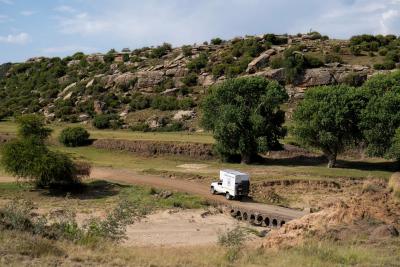
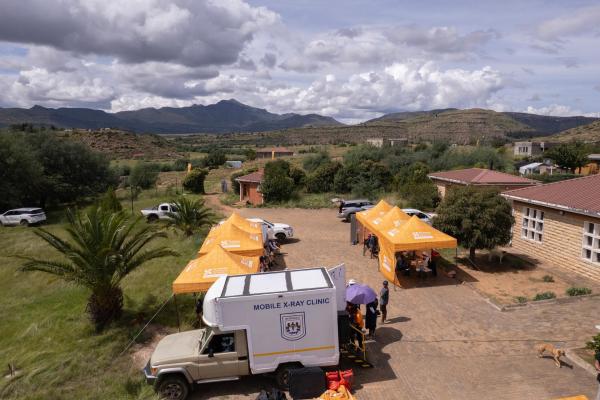
Mobile truck taking services to the rural communities in Mohale’s Hoek.
Photo by Justice Kalebe / PIH
Taking Care to the People
For Refiloe Mapalane, an X-ray assistant working in the mobile clinic, each day brings a new set of challenges and purpose.
“We see people who would not have made it to the hospital on their own. Some have been coughing for weeks, but they delayed coming because of the distance or cost. Taking health services to the community changes everything.”
Mobile clinics are equipped with diagnostic tools, including portable X-ray machines, allowing the team to screen patients on-site. This immediate access to testing significantly reduces diagnostic delays, which are critical for controlling the spread of TB.
Instead of waiting for patients to travel long distances to health facilities, the service comes directly to them, in their villages, at their doorsteps, and in community gathering points.
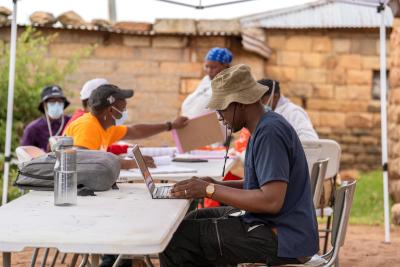
TB Elimination team during an outreach in Mohale’s Hoek.
Photo by Justice Kalebe / PIH
A Day in the Field
By mid-morning, the mobile clinics are fully operational. Community members begin to arrive, some responding to the presence of the TB Elimination teams in their villages, while others are drawn by awareness efforts conducted in advance.
Maleshoane Seleke, a TB Elimination community liaison officer, plays a key role in this process, ensuring communities are informed, engaged, and ready to access services.
“Our work starts before the clinic even arrives. We speak to community leaders, we educate families about TB, and we encourage people to come forward for screening. By the time the mobile clinic gets here, people understand why it matters.”
Her work bridges the gap between the health system and the community, helping to reduce stigma and build trust, two factors that are often barriers to early TB detection.
But the day does not end in the afternoon. In many rural communities, people leave their homes before sunrise to work in the fields, and shepherds spend long hours tending livestock, often returning only at dusk. To reach them, the mobile clinic teams stay longer in outreaches.
As the light fades and the temperature drops, the clinic remains open, waiting for those who could not come earlier. It is not unusual for the team to pack up and begin their journey back long after dark.
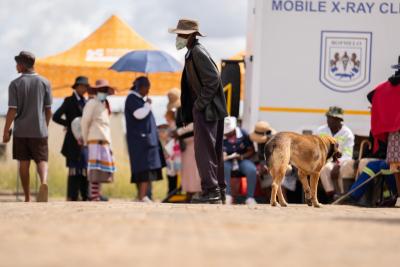
Patients waiting for services during the TB Elimination outreach.
Photo by Justice Kalebe / PIH
Finding TB Early, Saving Lives
Early detection is one of the most powerful tools in the fight against TB. The longer TB goes undiagnosed, the greater the risk of transmission and severe illness.
Through mobile truck outreaches, individuals who might otherwise remain undiagnosed are identified and quickly linked to care. For those who test positive, the next steps are clearly defined, whether it is treatment at a local health centre or referral to a higher level of care for more complex cases.
For many patients, this early intervention can mean the difference between a manageable illness and a life-threatening condition.
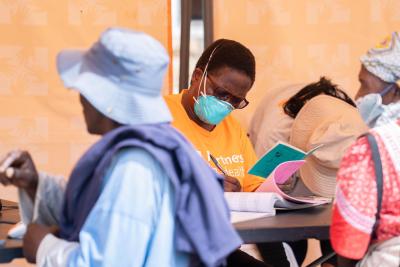
TB Elimination team screening patients during community outreach at Mekaling village, Mohale’s Hoek.
Photo by Justice Kalebe / PIH
Equity in Action
At its core, the mobile clinic model is about equity. It recognises that access to healthcare is not equal and actively works to close that gap.
Rural communities often face multiple barriers, including long distances to health facilities, limited transportation, and financial constraints. By bringing services closer, mobile clinics remove these barriers and ensure that no one is left behind.
According to PIH MDR-TB medical officer Dr Sebakeng Phate, early detection is the cornerstone of TB elimination. “When we bring diagnostic services closer to communities, we reduce delays and ensure that patients are started on treatment before the disease progresses. This is how we save lives and protect communities.”
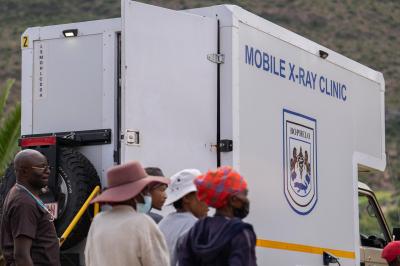
Patients queuing for x-ray services in Mekaling, Mohale’s Hoek.
Photo by Justice / PIH
Moving Closer to TB Elimination
Mobile clinics are more than a temporary solution. They are a strategic response to a long-standing challenge, and a key part of a broader effort to eliminate TB.
Each person screened, each diagnosis made, and each patient linked to care brings Lesotho one step closer to that goal.
For communities that have long been underserved, the presence of a mobile clinic sends a powerful message: care is not out of reach. It is here, it is accessible, and it is for everyone, even if it takes a long day and a late journey back home to make that possible.