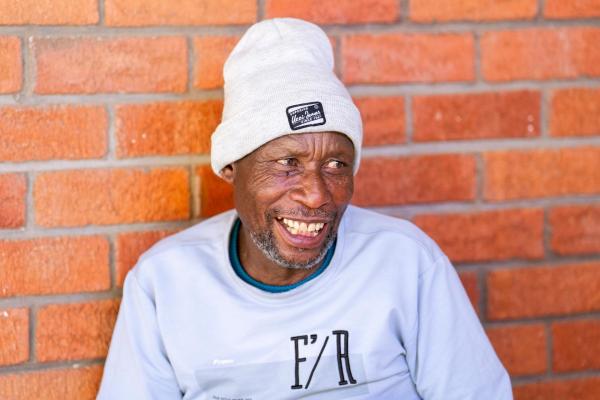
For Janki Moneni, a 62-year-old man, the past months became a relentless fight against a devastating illness. What began with troubling symptoms slowly turned into a life-threatening medical crisis that required intensive care, specialized treatment, and the dedication of a committed medical team.
Weeks of Worsening Illness
Moneni’s struggle began with repeated visits to his district hospital. Each time, he reported the same severe symptoms: persistent coughing, significant weight loss, and an inability to eat.
Despite his worsening condition, he received very little care. Medical staff provided hydration via a cannula, but no specific treatment was given for his symptoms.
For three agonizing weeks, Moneni remained in the district hospital as his health continued to deteriorate. Weak and growing thinner, he felt neglected while still searching for answers about what was causing his illness.
A turning point finally came when a sputum sample taken from Moneni was analyzed at the National Reference Laboratory (NRL). The results revealed the cause of his illness: Multidrug-Resistant Tuberculosis (MDR-TB).
Recognizing the seriousness of his condition, the hospital arranged for him to be transferred to a specialised facility run by Partners In Health (PIH) Lesotho, the Botšabelo MDR-TB Hospital, to receive more advanced care.
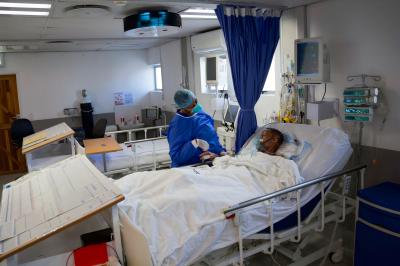
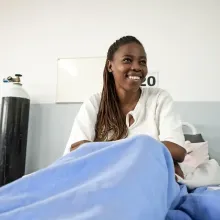
Mpho Pholoanyane (ICU Manager) attending to Janki Moneni at Botšabelo Hospital in Maseru, Lesotho.
Photo by Justice Kalebe / PIH
Fighting for His Life
By the time Moneni arrived at the Botšabelo MDR-TB Hospital, his condition had become critical.
His blood pressure was dangerously low, and his temperature was alarmingly high. Doctors immediately admitted him to the High Dependency Unit (HDU) so they could closely monitor and treat him.
During a ward round the following morning, clinicians discovered that Moneni was suffering from sepsis, a severe infection that in his case had been caused by tuberculosis. The medical team confirmed the MDR-TB diagnosis and moved quickly to stabilize him.
Despite these interventions, Moneni’s condition continued to worsen during the next 24 to 48 hours. He eventually stopped talking and then stopped breathing (respiratory arrest).
The doctors made the urgent decision to place him on a ventilator to keep him alive.
He was subsequently admitted to the Intensive Care Unit (ICU) in a coma secondary to multiple severe central nervous system infections, including TB meningitis, bacterial meningitis, cryptococcal meningitis, and viral encephalitis.
In addition to these conditions, Moneni was critically ill with:
- Severe pancytopenia (anemia, thrombocytopenia, and leukopenia)
- Acute Respiratory Distress Syndrome (ARDS) with type 1 respiratory failure secondary to TB sepsis
- Severe undernutrition
- And other co-morbidities.
“For patients in this condition, every moment matters,” says Mpho Pholoanyane, an ICU nurse with Partners In Health Lesotho. “He had stopped breathing, and the ventilator became critical to sustaining his life while the medical team worked to treat the infection.”
All these conditions were intensively managed by the multidisciplinary team. Moneni remained on ventilatory support in the ICU for several weeks. After five weeks of ICU admission, he was successfully extubated as his condition gradually improved.
“Seeing a patient begin to breathe independently again after such a long time on a ventilator is a powerful moment,” Pholoanyane says. “It showed that the treatment and the intensive care were working.”
Recovery from tuberculosis is often slow, but this moment marked a crucial step forward in Moneni’s journey.
The Long Road to Recovery
When Moneni arrived at Botšabelo Hospital, clinicians faced a difficult challenge.
“He came to Botšabelo with no medical history,” says Dr. Stephanie Mpinda, a medical doctor with Partners In Health Lesotho. “When he arrived, he was unable to walk or talk.”
He also looked like he was not well taken care of, reflecting how severely his condition had deteriorated.
The only information available at the time was a piece of paper indicating that his HIV status.
“The beginning was extremely challenging because we didn’t have any medical history to guide us,” Mpinda says. “He was not talking, and it was difficult to treat him.”
As his care continued, doctors also started epilepsy treatment, and they discovered he had hearing difficulties.
“At one point the medical team had nearly lost hope,” Mpinda recalls.
Moneni spent months in intensive and high-dependency care as clinicians continued working to stabilize and treat him.
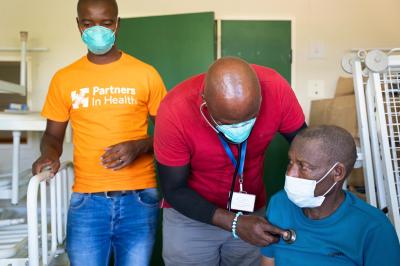
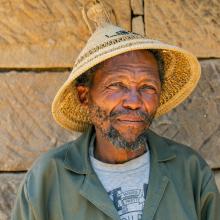
Janki Moneni (right) during his final review at Quthing Hospital with Dr. Stephanie Mpinda (PIH) and Talime Lebitsa community nurse at PIH (left).
Photo by Justice Kalebe / PIH
Rebuilding Strength
Moneni’s recovery required patience and persistence.
As his condition slowly improved, Moneni began physiotherapy to rebuild his strength. Health workers provided him with a walking frame to help him begin walking again.
“He stayed at Botšabelo Hospital for a long time,” Mpinda says. “During that time, we focused on helping him regain strength and mobility.”
When he was first admitted, Moneni weighed only 41 kilograms.
“Now he is around 60 kilograms,” Mpinda says, describing the remarkable transformation in his health.
For the ICU team, watching his recovery unfold was deeply meaningful.
“Patients who spend months in critical care often have a long road back,” Pholoanyane explains. “Seeing him gradually regain strength, start physiotherapy, and begin walking again was incredibly encouraging for the whole team.”
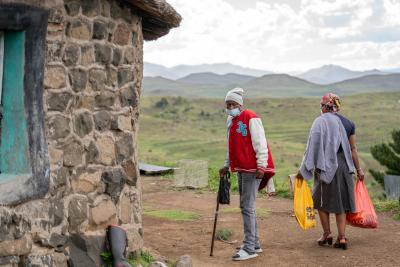
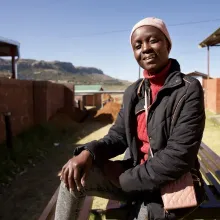
Janki Moneni’s home in Mphaki, Quthing, with his Treatment Supporter Notholesele Kakoli (right).
Photo by Justice Kalebe / PIH
A Remarkable Recovery
Moneni was eventually discharged home in a stable condition, continuing treatment for TB and undernutrition.
He completed his TB treatment successfully, achieving a cure after approximately 20 months.
Since discharge, he has remained clinically stable. His most recent chest X-ray was normal, and he has not required oxygen support at home.
“Since his discharge he has been doing well, and his sputum is now negative,” Mpinda says.
The journey was not easy for the medical team. One of the greatest challenges was beginning treatment with almost no information about his medical history.
Still, through teamwork, persistence, and specialized care, clinicians were able to guide him toward recovery.
“We are happy as a team to have managed such a patient,” Mpinda says.
Moneni’s journey from critical illness to recovery highlights the life-saving impact of intensive care, specialized treatment, and comprehensive support. Without the intervention of the Partners In Health team and its ICU facility, he would not have survived. Today, his recovery stands as a powerful reminder of what is possible when patients receive the holistic care they need at the moment they need it most.
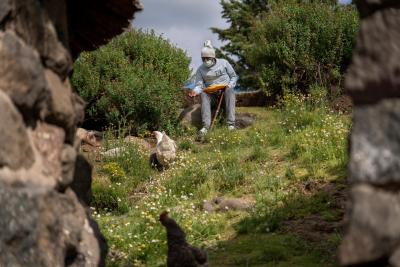
Janki Moneni’s home in Mphaki, Quthing feeding his chickens.
Photo by Justice Kalebe / PIH