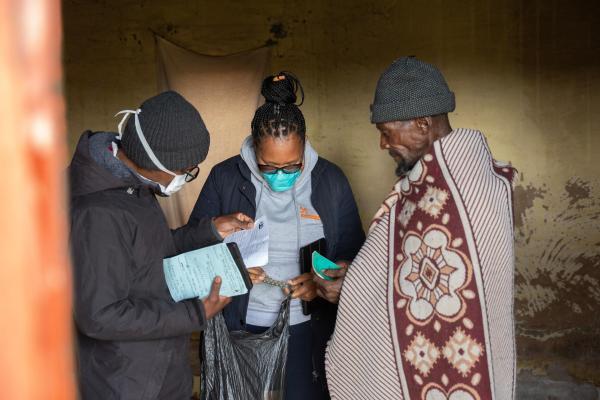
When a person is diagnosed with tuberculosis (TB), the focus naturally shifts to treatment. Yet behind every diagnosis is a family, a household, and a community that may also be at risk. For the TB Elimination Project, finding one patient is not the finish line. It is the starting point for a race against time to find others who may have been exposed and connect them to care.
Once a patient is diagnosed with TB, another critical process begins: contact tracing. This vital intervention helps identify people who may have been exposed to TB, ensuring they are screened, educated, and linked to care before the disease can spread further.
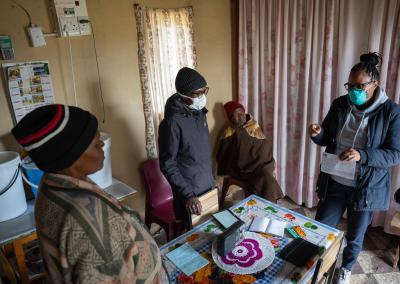
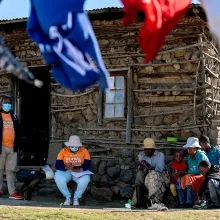
TB Elimination nurses Matšeliso Chabalala (right) and Kamohelo Rasehloho (second from left) visited TB patient Sekhoane Maliehe (second from right) and his wife, ‘Malita Maliehe (left), while conducting household contact tracing.
Photo by Justice Kalebe / PIH
According to Matšeliso Chabalala, a TB Nurse with Partners In Health (PIH) Lesotho, contact tracing is one of the most powerful tools in the fight against TB.
“Contact tracing is the process of identifying and screening people who have been in close contact with a person diagnosed with TB,” she explains. “The goal is to find additional cases early, prevent further transmission, and ensure that those at risk receive the care and support they need.”
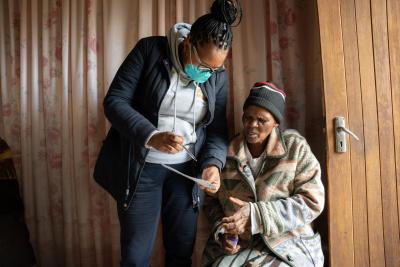
TB Elimination nurses Matšeliso Chabalala (left) and ‘Malita Maliehe (right), during contact tracing.
Photo by Justice Kalebe / PIH
Following a diagnosis, the TB Elimination team visits patients’ homes to assess living conditions and identify family members or other individuals who may have been exposed to the disease. Household members are screened for TB symptoms and, where active TB disease is excluded and they are eligible, exposed contacts are started on Tuberculosis Preventive Treatment (TPT), also known as TB prophylaxis. TB prophylaxis is a medication given to high-risk individuals infected with Mycobacterium tuberculosis to prevent latent infection from progressing into active, contagious disease.
Because TB spreads through the air when a person with infectious TB coughs, sneezes, or speaks, family members who share living spaces are among the most vulnerable.
“We do not only focus on the patient,” says Chabalala. “We look at the entire household. We ask who lives there, who spends time with the patient, and whether anyone else has symptoms such as a persistent cough, fever, night sweats, weight loss, or fatigue. This helps us detect TB early and stop it from spreading.”
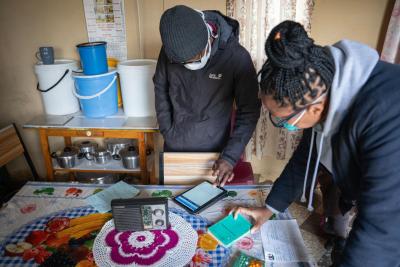
TB Elimination nurses Matšeliso Chabalala (right) and Kamohelo Rasehloho (left) during contact tracing.
Photo by Justice Kalebe / PIH
The process also includes extensive health education for the patient’s contacts. During home visits, the team teaches families how TB is transmitted, how treatment works, and the importance of supporting patients throughout their recovery.
“We educate family members on how they can keep themselves safe while still caring for their loved one,” Chabalala explains. “We discuss proper ventilation, cough etiquette, medication adherence, and the importance of completing treatment. We also identify a treatment supporter within the family who helps ensure that medication is taken correctly every day.”
As part of adherence support, treatment supporters are trained to observe and document each dose the patient takes.
“Every pill matters,” says Chabalala. “A treatment supporter records each dose to help us monitor adherence and ensure the patient completes the full course of treatment. Missing doses can lead to treatment failure, prolonged illness, and drug-resistant TB.”
For patients diagnosed through the TB Elimination Project’s community outreaches, contact tracing provides reassurance that they are not facing the disease alone.
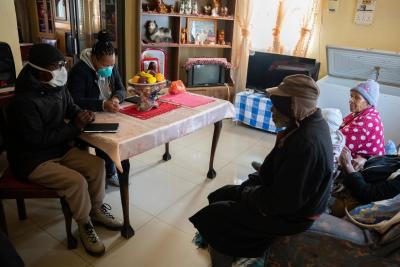
TB Elimination Nurses Matšeliso Chabalala (second from left) and Kamohelo Rasehloho (left) visited TB patient Lepolesa Makesi, his wife, Makhotso Makesi, and his family during a household contact tracing visit.
Photo by Justice Kalebe / PIH
One of those patients is 77-year-old Lepolesa Makesi from Ha-‘Mapotsane village in Mohale’s Hoek. A former mineworker, Makesi attended a TB Elimination outreach after experiencing persistent coughing, night sweats, and extreme exhaustion. There, he learned that he had TB for the second time.
“I cannot thank the TB Elimination team enough,” he says. “Without the outreach, I would have discovered my illness much later. The team came to my home, screened my family, and taught us how to protect one another. They showed us how important it is to take the medication every day and finish the treatment.”
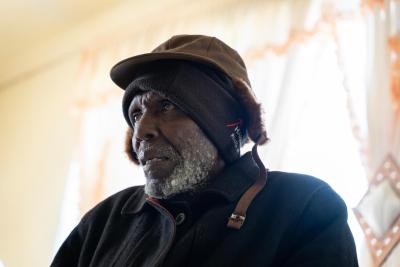
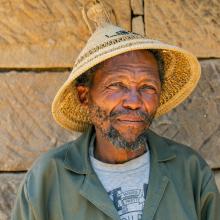
TB patient Lepolesa Makesi during a household contact tracing.
Photo by Justice Kalebe / PIH
For 82-year-old Sekhoane Maliehe of Ha-Raphiri village, the diagnosis brought back difficult memories. Having previously been treated for TB in 2006, he was frightened when he learned he had contracted the disease again.
“I was very scared when they told me I had TB again,” he recalls. “I remembered how difficult my first treatment was. But the outreach helped me because they found the disease before it became worse. During the contact tracing visit, the nurses explained everything to my family and taught us why it is important to take every dose of medicine and complete the treatment.”
Stories like these demonstrate why contact tracing remains at the heart of the TB Elimination Project’s Search, Treat, and Prevent strategy.
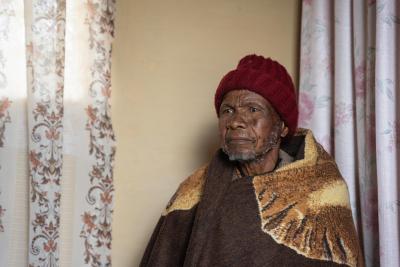
TB patient Sekhoane Maliehe during contact tracing.
Photo by Justice Kalebe / PIH
For Chabalala, every household visit is an opportunity to protect not just one person, but an entire family.
“Contact tracing is about more than finding disease,” she says. “It is about finding people early, preventing transmission, supporting families, and helping patients successfully complete treatment. Every home we visit brings us one step closer to eliminating TB in our communities.”
As the TB Elimination Project continues reaching remote villages in Mohale’s Hoek, contact tracing is ensuring that no diagnosis ends with a single patient. Instead, it becomes an opportunity to safeguard families, strengthen communities, and break the chain of TB transmission for generations to come.